
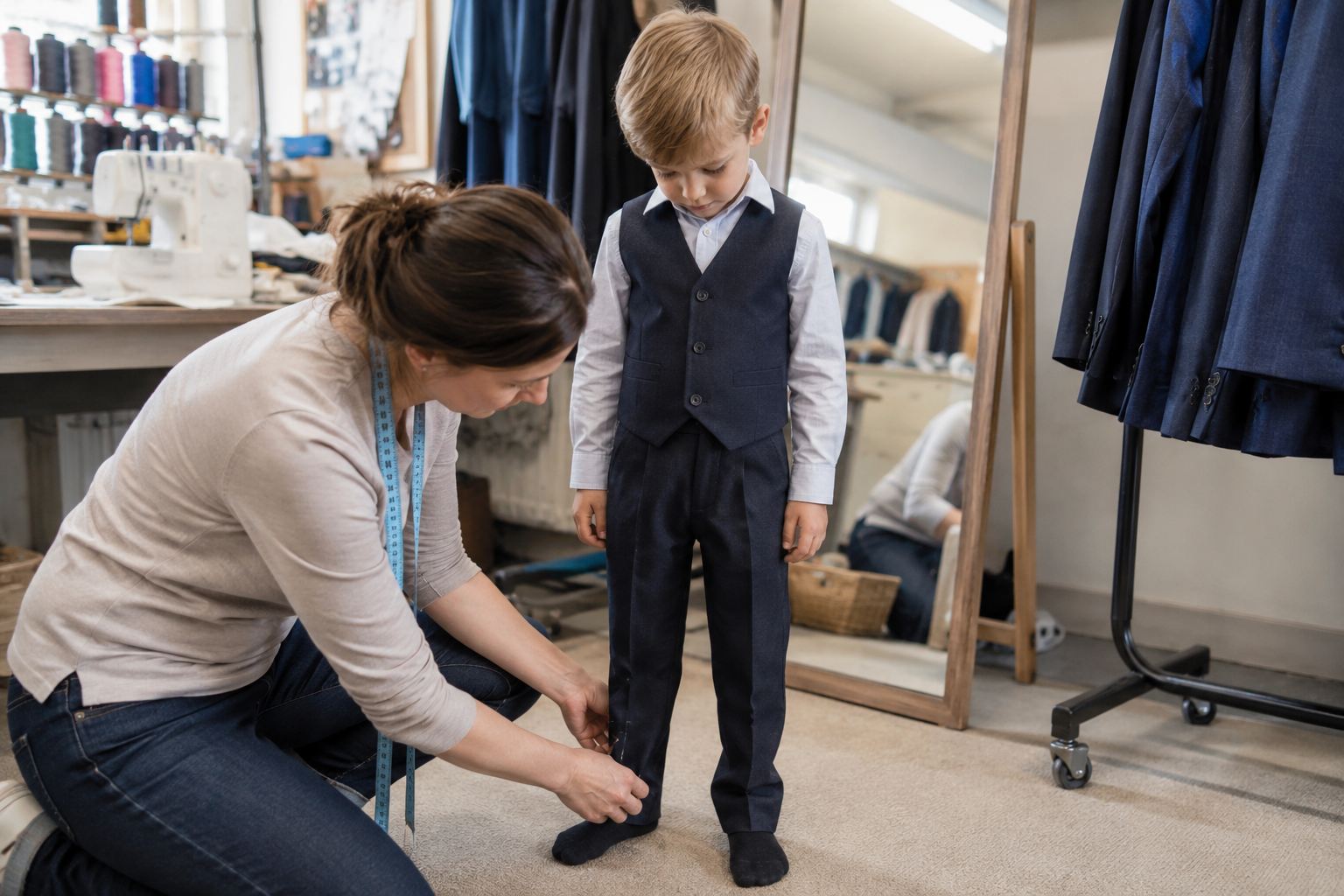
You bought the next size up to get ahead of it. Smart move, except now the waist gaps, the hem drags, and it looks like the clothes are wearing your child instead of the other way around. Sound familiar?
Buying ahead only pays off if you know how to adjust what doesn’t fit yet. These eight alteration tips are the practical middle ground between wearing it now and saving it for later. We cover simple home fixes and the jobs worth taking to a professional tailor.
Tip 1: Use Adjustable Waistbands Before Altering the Waist
Before you pick up a needle or call a tailor, check the inside of the waistband. Most school uniform trousers and skirts, the kind Henderson and Summerlin families stock up on every August, already have a built-in fix you may not know about.
Where the Hidden Elastic Adjustment Is in Most School Uniform Trousers and Skirts
Look inside the waistband for a button-and-elastic loop system. It typically sits along the interior waistband seam and can take in up to 2 inches of extra width without any sewing at all. Slide the button to a tighter loop, and the waist cinches cleanly. That’s it.
If the pants fit in the length but swim at the waist, this is your first stop. It takes 30 seconds, and it’s fully reversible when they grow into them.
Tip 2: Hem Pants With an Unfinished Hem You Can Let Down Later
Hemming is one of the most common children’s alterations parents tackle at home, but the way you do it matters. A permanent hem locks in that length forever. A reversible hem buys you another growth stage.
How to Fold and Secure a Temporary Hem That Holds Through Washing
Here’s the approach that works for school trousers, casual pants, and jeans:
- Fold the excess fabric up and inside the pant leg, not under, so the outer hem looks clean.
- Leave two to three inches of extra fabric folded inside so you can let it down later.
- Secure with a loose hand-basting stitch or iron-on hemming tape if you’d rather skip the needle.
This holds through washing, looks tidy, and comes undone in minutes when growth hits. Skip this method for dress trousers that need a pressed crease; those are better handled with a proper finish.
Tip 3: Add a Hidden Tuck at the Back Seam to Take In a Loose Waist
Pants that fit in length but have a gap at the back waist are the most common complaint in children’s clothing. It’s a proportion problem, not a size problem, and there’s a clean fix for it.
How to Pinch and Sew a Simple Back Seam Tuck Without a Machine
- Pinch the extra fabric at the center back seam.
- Fold it toward the inside of the pants.
- Stitch it flat by hand.
This removes up to 1.5 inches from the waist without touching the side seams or the waistband. It works on jeans, uniform trousers, and casual pants. Don’t like the result? A seam ripper undoes it in five minutes.
For dress trousers or uniform pants where a clean finish matters, this is a quick tailor job, typically under 15 minutes at the shop.
Tip 4: Let Out Side Seams Before Buying a New Size
A shirt that’s too snug across the shoulders or a dress that’s getting tight through the middle doesn’t automatically mean it’s time to size up. Check the seams first.
How to Check for Seam Allowance and Safely Add Width to a Tight Shirt or Dress
Most children’s garments are sewn with at least half an inch of seam allowance on each side. That’s usable room.
- Open the side seam with a seam ripper.
- Press the seam flat with an iron.
- Restitch closer to the raw edge.
Each side gives you 0.5 to 1 inch of extra width, enough to extend a school shirt or casual dress by a full growth stage. Before you start, check the depth of the original seam allowance so you know exactly how much room you’re working with.
Tip 5: Use Elastic in Shoulder Straps to Adjust Dress Length Without Hemming
Here’s one most parents skip right over: if a dress is too long, the hem isn’t the only place you can adjust it.
Shortening Shoulder Straps Raises a Dress Hemline Without Cutting the Fabric
Shortening an adjustable strap by 1 to 1.5 inches raises the hemline by roughly the same amount. No cutting. No new hem finish. The original hem stays intact, and the alteration is completely reversible.
This is especially useful for family occasions, school picture day, church, holiday photos when a dress bought for next year needs to work right now. It takes about 10 minutes and requires only a needle, thread, and basic stitching.
Tip 6: Reinforce Stress Points Before They Become Tears
This tip saves money. Children’s clothing fails in the same four places every time, and a few minutes of reinforcement before the first wear prevents the most expensive repairs later.
The Four Areas in Children’s Clothing Most Likely to Tear
| Location | Fix |
|---|---|
| Crotch seam | A simple line of hand stitching before first wear |
| Knee area | Iron-on patches on the inside of the knee |
| Underarm seam | One extra pass of stitching along the original seam |
| Pocket corners | A few reinforcing stitches at each corner |
A simple line of hand stitching before first wear
Iron-on patches on the inside of the knee
One extra pass of stitching along the original seam
A few reinforcing stitches at each corner
The crotch seam and pocket corners are where most children’s pants split first. Five minutes of attention before the school year starts can extend the life of a uniform by a full growth season and save a $30 replacement cost.
Tip 7: Take In Sleeves at the Shoulder Seam, Not the Cuff
When a sleeve is too long, the instinct is to fold it at the cuff or hem it at the end. That’s the wrong move, and it shows.
Shortening Sleeves at the Shoulder Produces a Better Result Than Folding or Hemming at the Cuff
Hemming at the cuff shifts the button placement and narrows the sleeve opening. Shortening at the shoulder seam moves the whole sleeve up while keeping intact every proportion; the button stays where it belongs, the opening stays the right width, and the sleeve hangs correctly.
For a casual shirt, this is a straight seam you can do by hand. For dress shirts, blazers, or school uniform shirts where the finish needs to be clean, hand this one to a tailor. It’s one of the most common children’s alterations a professional shop handles, and it’s a quick turnaround.
Tip 8: Add a Fabric Insert to Extend the Life of Outgrown Dresses and Skirts
A dress that’s too short doesn’t have to be retired. A fabric insert at the hem adds real length and, done right, looks like a design choice rather than a fix.
How to Add a Coordinating Fabric Panel at the Hem to Add 2 to 3 Inches of Length
- Choose a fabric with a similar weight to avoid puckering at the seam
- Cut a strip wide enough to go around the full hem
- Stitch it to the bottom of the existing hem to add 2 to 3 inches of length
Contrasting fabric works well – add a solid color under a patterned uniform skirt, or a stripe at the hem of a plain dress. This is a 20-minute hand-sewing project for parents who are comfortable with basic stitching. If you’d rather have it done cleanly and quickly, it’s a straightforward professional alteration.
Some Fits Need a Professional – Super Cleaners Makes Children’s Clothes Work
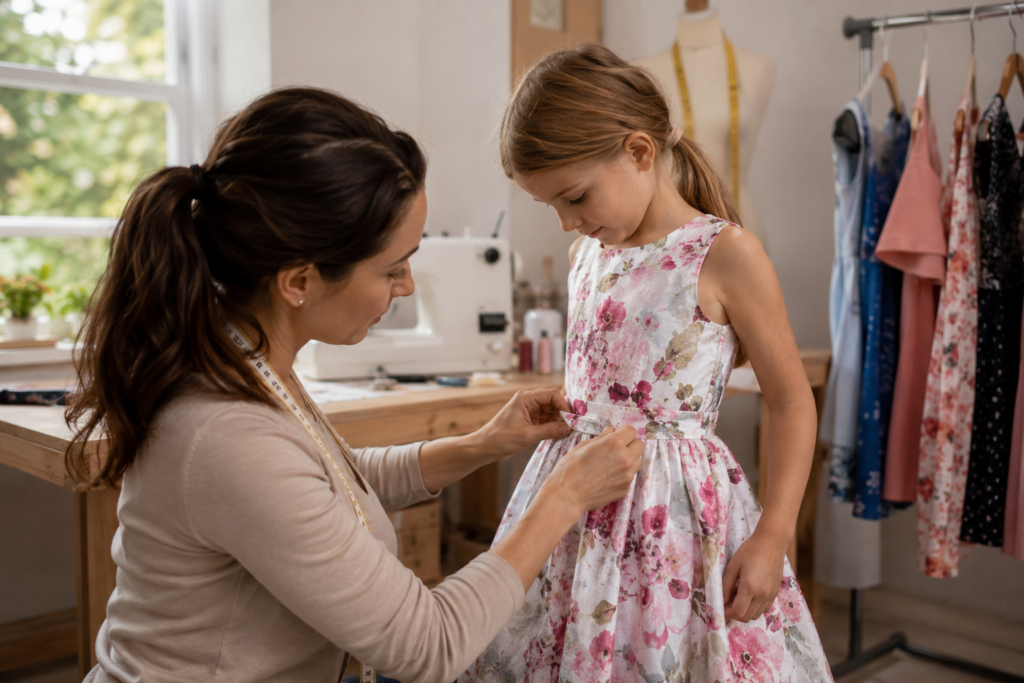
At Super Cleaners, we handle every hem, seam, and waist alteration with the same attention, whether it’s a school uniform worn five days a week or a dress worn once for a special occasion. Our skilled tailors and seamstresses work on garments in every material and price range, and nothing leaves our shop until the fit is right.
Bring it in and let us take it from there. Las Vegas families across Henderson, Summerlin, and North Las Vegas trust us with their children’s clothing, and we’d love to help yours fit the way they should.
Contact Guide:
📍 Downtown Location – Tailor Hours: Monday, Tuesday, Thursday, & Friday: 9:00 AM – 3:00 PM
📞 Phone: +1 725-255-2392
📍 Flamingo Location – Tailor Hours: Monday – Friday: 7:00 AM – 11:30 AM | Saturday: 9:00 AM – 11:30 AM
📞 Phone: +1 725-900-2532