

You’re trying to get a stain out of your clothes, but you have no idea how it got there, and now you’re stuck guessing. You don’t remember spilling anything, but there’s a blotch on your shirt that won’t wash away. Worse, every method you try just makes those stains spread, fade unevenly, or push deeper into the fabric.
That’s the frustrating part about stains, especially when you’re not sure whether you’re dealing with a fresh one or something that’s already set in. Before you reach for another random stain remover, here’s what you should understand about fresh vs. set-in stains and what to do next.
How to Tell If a Stain Is Set-In or Still Fresh
If you keep on rewashing or rubbing a stain and it still won’t budge, there’s a good chance you’re not dealing with a fresh spill anymore. Set-in stains are tricky like that – they settle deep into fabric fibers and hang on tight, often getting worse the more you try to treat them with guesswork.
To help you spot the difference quickly, here’s a simple table breaking down the key traits of fresh vs. set-in stains:
| Clue | Fresh Stain | Set-In Stain |
|---|---|---|
| Texture | Still wet, damp, or sticky to the touch | Completely dry and absorbed into the fabric |
| Color/Appearance | Bright, sharp edges may look smeared | Dull, darkened, or yellowed; edges may look “faded in” |
| Smell (if any) | Odor may still be present (e.g., food, wine, sweat) | Usually odorless unless it’s moldy or old organic residue |
| Ease of Removal | Often lifts with basic washing or spot treatment | Requires pre-treatment, soaking, or professional cleaning |
| Reaction to Water | Color may lift or smear when dampened | No change when damp; stays locked into the fabric |
| Color Transfer on Cloth | Some of the stain transfers easily when dabbed with a clean white cloth | Very little to no transfer – stain remains locked in |
| Fabric Response | Fabric feels normal or slightly wet | Fabric may feel stiff, rough, or slightly discolored |
Why Fresh Stains Are Easier to Remove Than Set-In Ones
That ketchup splatter, coffee spill, or foundation smudge may look alarming, but if you catch it early, you’ve got a real shot at removing it completely. The trouble starts when that stain sits for hours, or worse, days.
Quick Fact: According to textile experts, most fresh stains can be removed with a simple rinse or treatment within the first 24 hours. After that, they’re considered “set-in” and require deeper, more intensive cleaning.
Here’s why fresh stains are easier to deal with:
- They haven’t had time to bind to the fibers. Most stains are made up of pigments, proteins, or oils that gradually bond with fabric. When it’s fresh, it’s still sitting on the surface, and easier to lift.
- They respond well to simple treatments. Blotting, rinsing with cold water, or a quick spot treatment is often enough to get rid of a fresh spill. No need for harsh chemicals or long soak times.
- They haven’t oxidized yet. Exposure to air causes certain stain particles (like sugars, oils, or wine) to oxidize and change color, making them more difficult to remove later.
- They haven’t been heat-set. Washing or drying a garment before removing a stain can cause it to “bake in,” locking the stain permanently into the fibers.
- They’re easier to identify. You usually know when and where a fresh stain happened, making targeted treatment faster and more effective.
- Quick action prevents the spread. Fresh stains can be contained before they soak further into seams, linings, or multiple fabric layers, which are particularly harder to clean.
What NOT to Do if You Don’t Want Regular Stains to Become Set-In
Most people mean well but unknowingly make stains worse. You see a mark on your shirt and instinctively scrub it with whatever’s nearby (soap, hot water, maybe even a paper towel) but instead of solving the problem, you’re forcing the stain deeper into the fabric or setting it in for good.
Do not make these common mistakes if you want any chance of saving your wardrobe:
- Do not scrub the stain aggressively. Rubbing too hard pushes the stain deeper into the fabric and can damage delicate fibers.
- Do not use hot water right away. Heat can cause many stains, especially protein- and sugar-based ones like blood, sweat, and juice, to set permanently.
- Do not wipe the stain – blot it. Wiping spreads the mess; blotting helps lift it from the surface.
- Do not wait too long before treating the stain. The more time passes, the harder it is to remove, especially if it oxidizes.
- Do not toss the garment into the dryer before the stain is fully gone. Heat from the dryer can seal in a stain for good.
- Do not reach for bleach without checking the fabric first. Bleach can ruin delicate or colored fabrics and create permanent discoloration.
- Do not ignore the care label. Using the wrong cleaning method can cause more damage than the stain itself.
- Do not overdo it with detergent or DIY mixtures. Too much product can leave behind residue that traps the stain or even worsens it.
Stains You Need to Treat Fast Before They Set In
Some stains are more aggressive than others. These types can become permanent if not handled quickly and correctly. You’ll want to act immediately, within minutes, if possible, especially if you’re dealing with acidic or oil-based spills. That includes red wine, coffee, salad dressing, and makeup. The more colorful or greasy the stain, the faster it clings to your textile fibers.
Treat these fast or regret it later:
1. Red Wine or Coffee
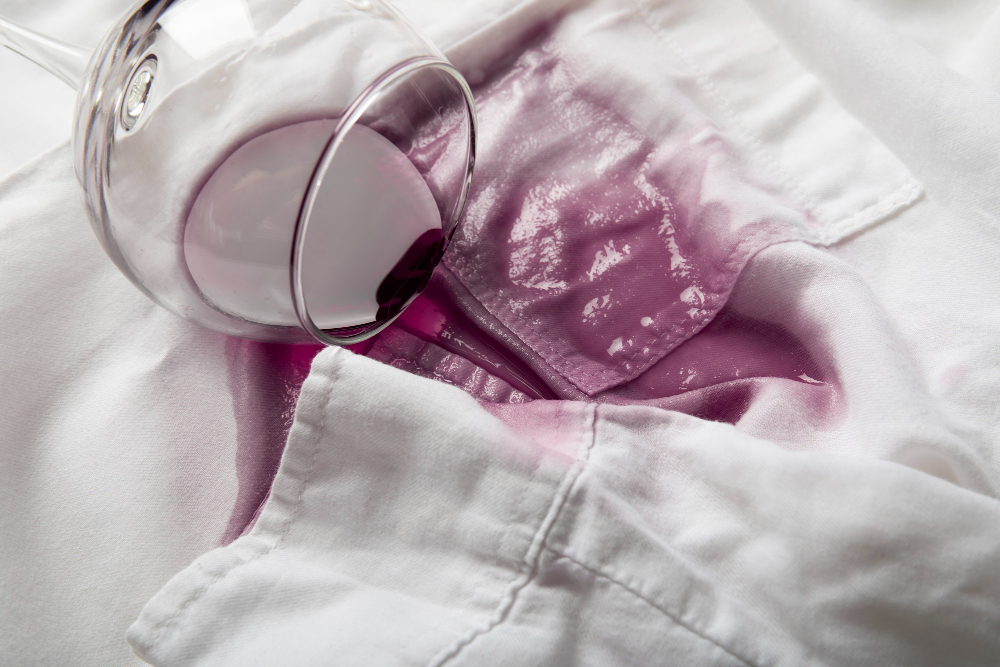
What to do: Blot the spot with a clean cloth and flush with cold water. Avoid heat at all costs. If available, apply a mild detergent or a vinegar-water solution before washing.
2. Oil and Grease (salad dressing, butter, cooking oil)
These stains sink into fibers and hold on tight, especially to natural fabrics like cotton and linen.
What to do: Gently blot, then sprinkle cornstarch, baking soda, or even talcum powder to absorb the oil. Let it sit 10–15 minutes, brush off, and treat with a grease-fighting dish soap before washing.
3. Lipstick or Foundation
These are double trouble: oil-based and pigmented. They smear easily and can bleed deeper if rubbed.
What to do: Use a cotton swab dipped in rubbing alcohol or a stain remover made for cosmetics. Dab gently, never scrub, and rinse with cool water.
4. Blood or Sweat
Both are protein-based stains, and heat will “cook” them into the fabric. Once that happens, they’re incredibly hard to remove.
What to do: Rinse immediately with cold water and blot. Enzyme-based stain removers work great here, but never, ever use hot water or toss it in the dryer before the stain is gone.
Don’t Let a Tough Stain Ruin Your Day – Trust Super Cleaners for Professional Results!
If you’re stuck with a stubborn stain and no amount of scrubbing or rewashing seems to work, hand it over to us at Super Cleaners. As the only family-owned dry cleaner on the Las Vegas Strip, we bring over 20 years of trusted experience and a true passion for garment care. We use professional tools, advanced cleaning tech, and environmentally friendly methods to safely remove set-in stains from dress shirts, linens, formal wear, and even wedding dresses.
We proudly serve Downtown Las Vegas, the Las Vegas Strip, Mountain’s Edge, and Spring Valley, always with a commitment to quality, sustainability, and top-tier customer service.
Want to schedule a professional dry cleaning service? Call us at Downtown / Las Vegas Strip – 725-999-5452, Mountain’s Edge / Blue Diamond – 702-269-3003 or Spring Valley / Flamingo – 725-243-7199 and we’ll get your clothes spotless and back in your hands in no time.