
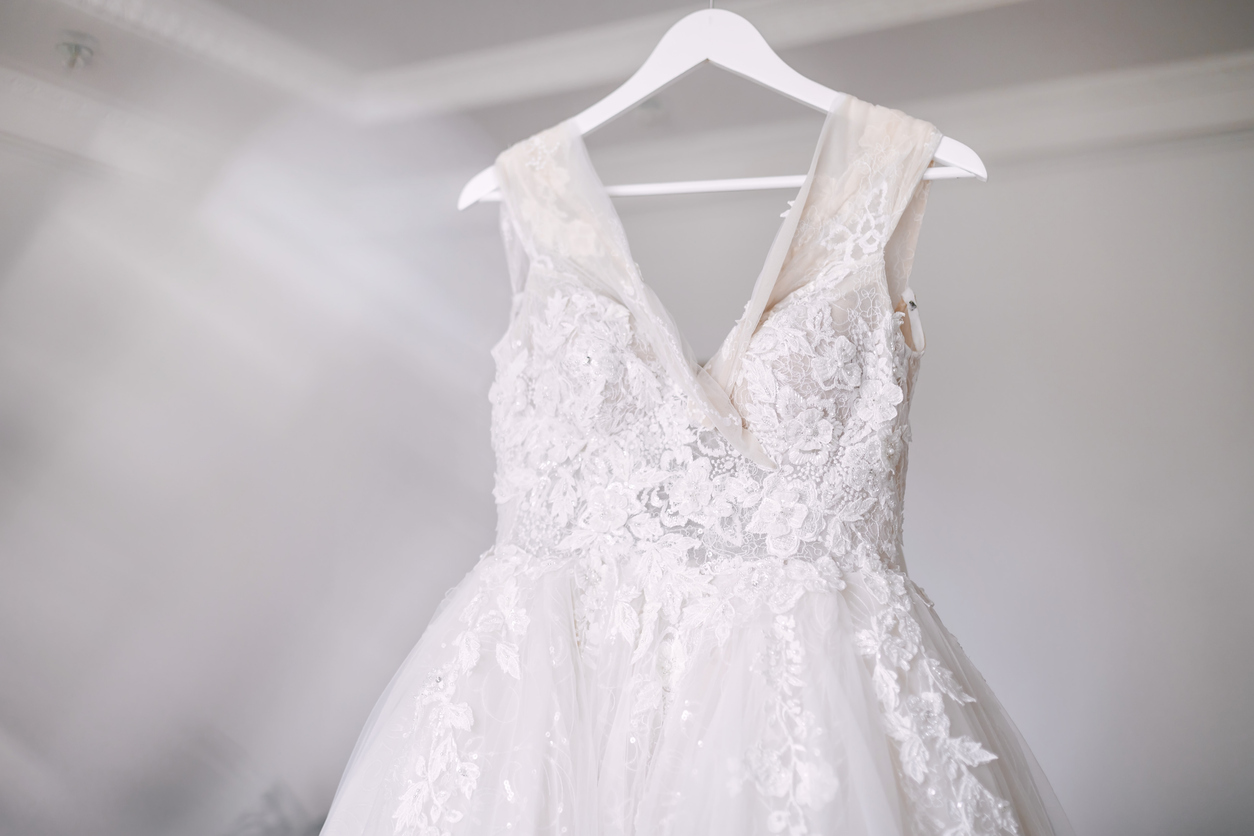
Cleaning your wedding dress before you store it isn’t an upsell. It’s the reason preservation actually works. Once your dress goes into a sealed box, everything trapped inside stays trapped: residue, oils, dust you can’t even see. A sealed, climate-controlled environment doesn’t clean anything, it only holds whatever’s already there for years.
Skipping wedding dress cleaning doesn’t save you a step. It seals damage in place before it can ever be treated. Here are six specific areas professional cleaning protects against, and why doing it first is what makes storage actually work.
1) Champagne and Sugar Residues That Would Otherwise Turn Yellow
Champagne, cake frosting, and fruit juice leave residues that look faint or invisible on your wedding day. Left in a sealed box, they oxidize. Over 6 to 24 months, faint splashes darken into yellow-brown patches, set permanently into the fibers.
Professional cleaning breaks down these sugar residues before oxidation starts. Do it now, and there’s nothing left for storage to lock in.
Where These Residues Actually Sit on Your Dress Right Now
Sugar residue isn’t limited to obvious splash marks. Check these areas even if nothing is visible to the eye:
- The bodice and neckline, from toasts and sipping drinks throughout the reception
- Sleeve cuffs and wrist areas, from holding a glass for hours
- The lower hem, where cake or frosting can transfer during cutting and serving
2) Body Oils and Sweat That Would Break Down Silk Fibers
Silk and other protein-based fabrics are more fragile than they look. Body oil contains fatty acids that break down these fibers at a microscopic level, and that breakdown continues as long as the oil stays in contact, box or no box.
A full day of wearing, dancing, and moving through a reception works sweat and body oil into the fabric whether or not you notice. Cleaning removes the oils before storage begins, stopping fiber breakdown before it starts.
Which Areas of Your Dress Absorbed the Most
Body oil and sweat concentrate in predictable places, and these are the spots most likely to show fiber weakening first if the dress goes uncleaned:
- Underarms and side seams
- The waistband and any fitted bodice panels
- The back closure, where fabric sits tightest against skin
3) Makeup and Cosmetic Residue at the Neckline and Bodice
Foundation, lipstick, and mascara transfer onto fabric more easily than brides expect, especially during hugs, photos, and touchups. These residues contain oils and pigments that oxidize over time and can bleed into surrounding fabric.
Once sealed in a box, that bleed has nowhere to go but outward. Cleaning removes the pigment and oil before that spread happens, the only point in the timeline where the stain is still fully contained.
Why These Stains Are Hard to Spot Until They’ve Already Set
Cosmetic transfer often blends into the fabric color at first, especially on ivory or champagne toned dresses. A faint mark near the collar or shoulder seam can look like nothing under normal light, but months of sealed, undisturbed contact are enough to let it darken into something visible.
4) Hem Soil and Grass Staining From the Ceremony and Dance Floor
The hem takes on more damage than any other part of the dress, most of it unnoticed during the event. Outdoor ceremonies, grass, gravel walkways, and hours on a dance floor grind soil into the fabric at the fiber level, not just the surface.
Surface dirt brushes off. Ground in soil doesn’t. Sealed into a box, it binds permanently, and a minor smudge on your wedding day becomes a fixed stain by the time the dress comes back out.
Why Ground In Soil Behaves Differently Than Surface Dirt
Soil that sits on top of fabric can often be brushed or shaken free. Soil that’s been pressed into the weave by repeated foot traffic, kneeling, or dragging across a dance floor requires the same fiber level treatment as a genuine stain, not a quick wipe down, which is why hem soil needs the same professional attention as anything else on this list.
5) Airborne Dust and Skin Cells That Accumulate Between the Wedding and Storage
Even a dress hanging untouched for a few days picks up airborne dust and skin cells. This buildup is invisible but chemically active, interacting with the fabric once sealed into a box rather than staying inert.
It’s easy to overlook since there’s no stain to point to. But a dress going straight from closet to sealed archival box carries this buildup with it, and cleaning is the only step that clears it before the seal goes on.
How Fast This Buildup Happens, Even in a Few Days
You don’t need weeks of hanging time for this to matter. A dress left hanging in a bedroom or closet for even a few days picks up enough household dust and skin cell buildup to matter once it’s sealed away for years rather than days.
6) A Stable Baseline That Preservation Materials Are Designed to Hold
Acid-free tissue and archival boxing aren’t cleaning tools, they’re stabilizing tools. Their job is to hold steady the condition of the dress by controlling light, moisture, and air exposure, which only works if that condition is clean to begin with.
Think of it as the difference between preserving something and freezing a problem in place. If the dress holds active residue, oxidizing stains, or fiber breakdown already in progress, preservation materials don’t pause any of it. They just seal it in alongside the dress.
Why Acid-Free Tissue and Archival Boxing Cannot Neutralize Existing Damage
Acid-free tissue prevents new acid transfer, and archival boxes block light and regulate humidity, but neither one has any cleaning function. They were never designed to remove residue, and using them on an uncleaned dress is treating a symptom while leaving the actual cause sealed inside.
The Timing That Lets All Six Protections Work
How soon should you clean your wedding dress? As soon as reasonably possible, then move directly into storage without a long gap. All six protections above depend on treatment happening before residues set, and the longer a dress sits uncleaned, even just hanging in a closet, the more those reactions progress.
The two steps work as a pair, not separate errands on your own schedule. Cleaning only protects the dress if storage follows soon after, so residues and oils don’t have a window to return before the seal goes on.
How Long You Have Before the Gap Starts Working Against You
There’s no universal countdown clock, but textile conservation standards are straightforward: treat the dress within weeks of the wedding, not months, then move into preservation storage shortly after. Waiting a year or more lets every issue above progress past the point where cleaning alone can fully reverse it.
What Happens If You Skip Cleaning and Store Anyway
Some dresses get boxed without cleaning first, to save time or because the bride assumed the dress looked fine. The box does exactly what it’s designed to do: hold steady the condition of the dress, including whatever residues, oils, and soil are already there.
Months or years later, whatever was sealed inside has typically progressed. Sugar residues darken. Oil affected fabric weakens where it concentrated. What cleaning could have resolved often requires more intensive restoration after the fact, and some fiber damage can’t be fully reversed.
What Cleaners See When a Previously Boxed Dress Comes Back In
A dress stored uncleaned usually shows a pattern when it comes back in: faint stains darkened into visible spots, fabric stiffer or more fragile in high oil areas, and hem soil bound into the weave rather than sitting on the surface. None of this is unusual, it’s simply what a sealed environment does: holds a problem in place instead of preventing one.
Before You Box Your Dress, Take It to Super Cleaners
Everything above comes down to one thing: what goes into the box determines what comes out of it years later. If your dress hasn’t been cleaned yet, that decision is still in your hands.
At Super Cleaners, we’ve handled wedding dress cleaning and preservation in Las Vegas for over 20 years, and we built our process around exactly the risks covered in this article. Every dress receives meticulous stain treatment, delicate cleaning with natural solvents, and acid-free packaging designed to stop yellowing and deterioration before they start, not patch them up after the fact.
Call us today if you are in need of Wedding Dress Cleaning and Preservation Service and let our wedding dress specialists walk you through the process before putting your dress into a sealed box.
📍 800 S. Las Vegas Blvd., Las Vegas, NV, 89101, United States